Three generations on the same land. That is the interest underneath the complaint.
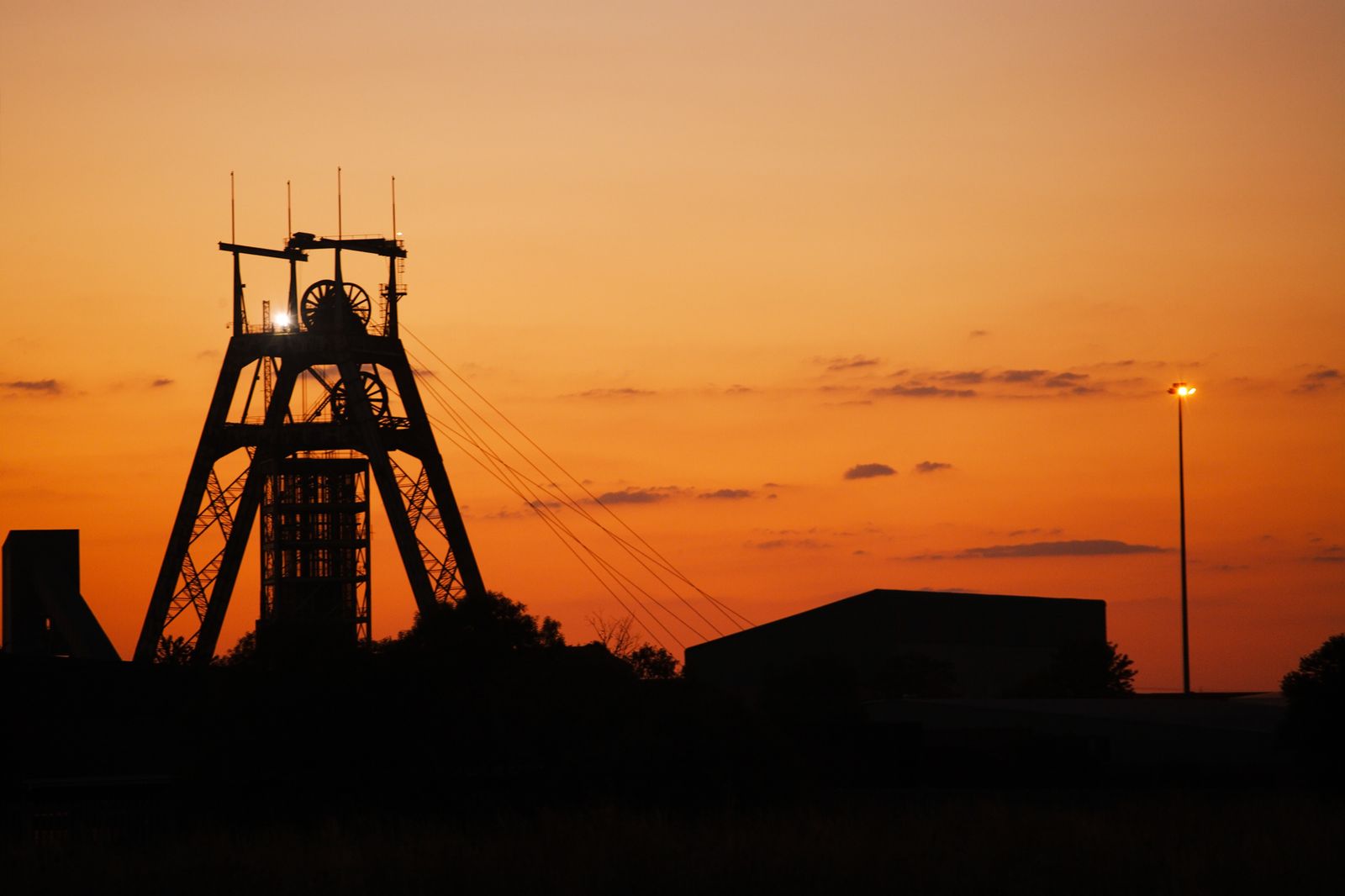
He’d farmed that land his whole life. So had three generations of his family before him. Then a gold mine went up nearby, legally, within every limit the regulator had set, and dust started settling on his water tanks, noise carried across the paddocks, and at night he said he could feel the vibration through the floor of his house. He was an elderly man, a multi-generational Australian farmer. He believed the mine had devalued his property, and he wanted to be bought out.
The mine could produce the reports proving it hadn’t — detailed and technical, and fully within its approved limits. He didn’t trust a word of them. They were written by people he’d never met, about reverberations and noise in a house he’d lived in for years, and no report was going to talk him out of what he could feel through his own floor. He had no interest in going to a regulator or a court. Instead, he complained about almost everything, as often as he could, for years, on the theory that wearing the company down would get him what arguing couldn’t.
It worked, in a sense. The dispute ran for twenty years. Legal and consulting costs alone came to approximately $2 million. Staff left the company because they couldn’t deal with the complaints anymore. An expansion approval worth hundreds of millions sat exposed to a man who had every reason left to keep objecting to it. And his own health, physical and mental, was going backwards under a fight that didn’t seem to have a winner in it for anyone.
When someone finally sat down
When the company eventually brought in an independent mediator, the science didn’t change and neither did the reports. What changed was that someone sat down with the mine’s people on their own, then with him on his own, and took the time to work out what was driving twenty years of complaints rather than responding to the complaints themselves.
What came out of it wasn’t a settlement. It was an offer: if he ever sold the farm for less than it would have been worth without the mine next door, the company would make up the difference. No agreement was signed. But the complaints stopped piling up, the relationship stopped being poisonous, and staff who’d been ready to leave stayed on. He got the first thing in twenty years that felt like someone taking his side of it seriously.
The lesson A position is what someone demands; an interest is why they demand it. He demanded to be bought out, and never was. What ended it was the reason underneath — protection against a loss he could not prove — and in twenty years nobody had asked him for it. Ask why, not what.
I’ve been on both sides of situations like this — as the CEO of a company under this kind of pressure, and later as the mediator called in once the lawyers were already involved. Both times taught me the same lesson the hard way: the project doesn’t stop because of the dispute. It stops because of what the dispute does to the company’s reputation, its relationships, and its ability to raise money or progress other activities while the fight is still going.
The diagnosis
It was never a legal problem
That’s not something a lawyer can fix alone, because underneath it, it isn’t really a legal problem. We call this discipline Social Licence Resolution — a form of non-adversarial stakeholder dispute resolution. It isn’t about who’s right. It’s about whether the people whose consent you need to keep building or operating still want to give it to you.
If you’re General Counsel, a Chief Legal Officer, or a Project Director at an ASX-listed resources, energy or renewable company, you know the moment we’re talking about. Three weeks into a dispute with a community, a landholder or a Native Title party, and your litigation team has just told you they’ll fight it. They’re probably right that you’d win. That’s not really the question. The question is what winning costs you in the meantime — the timeline, the financing, and the relationships you’ll still need in five years when you want to expand the same project.
Litigation and formal approval processes are good at working out who’s technically right. They’re not built for keeping a relationship intact that both sides are stuck with for the next twenty years, or for working out why a community is really digging in. Sticking to a position instead of asking why the other side holds theirs just locks both sides into a fight where the only way to move is to lose.
None of this is unusual. If you’re in resources, energy or renewables — or the shipping and infrastructure that moves what they produce — some version of at least one of these is probably happening somewhere in your business right now. It just hasn’t been named yet.
The approval was lawful. The acceptance was not automatic.
Patterns from the field
Five more, and what each one taught us
The lesson drawn from each of these is framed in the language of principled negotiation.
Tasmania, shipping, financial services. The sector changes; the failure does not.
01
Platinum mining — a listed operation
Deal with the relationship before the number
Nick van der Hoven
A platinum operation. Five hundred workers. Commodity prices falling, cashflow tight. An Indigenous community felt it was owed more compensation for land the company was occupying; the company felt it was already paying more than it could afford. Negotiations between management and the community’s elders broke down, and from there it went to lawyers — letters back and forth, each one costing more and achieving less than the last. The community threatened an injunction and took it to social media. The workforce, a lot of them from the same community, started an unofficial go-slow, and production dropped in a business where you don’t get a lost month back.
I was CEO at the time. It took three months and around $3.2 million in lost production and operating costs before I stopped leaving it to the lawyers and sat down myself, working out what each side needed rather than what they were demanding. We reached an agreement, and it held. But by the time we got there, the figure was smaller than what the delay alone had already cost the business.
Part of what had broken down in the first place wasn’t really about money. The elders felt they’d been treated disrespectfully in an earlier round of talks — not deliberately, but it read that way to them, and it mattered. Until that was dealt with directly, no figure was going to close the gap. Once it was, the rest of the negotiation was almost easy.
The lesson Deal with the relationship issues before the numbers. Positional bargaining cost far more than the settlement ever would have.
02
Exploration & mining — Tasmania
An open day broadcasts; it hears nothing back
Nick van der Hoven
An exploration company transitioning into mining, in Tasmania. A community group opposed the environmental impact of the project — not mining generally, but what this mine would do to land they lived on. The company tried something well-meant: an open day at the community hall, information boards, food. Almost none of the people in dispute with the company turned up. If you already think you’re in a fight with someone, you don’t go to their open day. The few who did come looked at generic material on noise limits and safety standards, put together by people they’d never met, and left without saying much at all. Meanwhile the environmental approval process dragged on for years, cost millions, and a public campaign made the relationship worse the entire time.
I was brought in as co-negotiator. Instead of another open day, we found the specific landholders who were at odds with the project and sat down with each of them privately, working out what was really bothering them rather than what the public campaign had been saying. Two years in, agreements have been reached with several of them. Not all — the rest is still open, and it’s cost around $1 million in legal and consulting fees to get this far. It isn’t a clean result, and I won’t pretend it is. But it’s moved further than the public process, or the open day, ever did.
The lesson Communication is a people problem, not a materials problem. An open day broadcasts; it hears nothing back, and the people actually in dispute were never in the room. Find them, and go one at a time.
03
Infrastructure — Central West NSW
A group is not a party
Nick van der Hoven
An infrastructure project in Central West NSW needed easement agreements from a group of landholders with genuinely different interests — some wanted compensation, some cared more about the impact on their farming operations, some had environmental concerns of their own. One of them had made himself the group’s spokesperson and was running his own agenda under that cover. Talks stalled, and the company was close to walking away from the project altogether, while an informal public campaign built pressure in the background. The company was listed, and its share price was already wearing the uncertainty.
Every week of delay was a straight cost — capital tied up, nothing being built, while one person’s agenda held up dozens of landholders who mostly just wanted a fair outcome. Once we worked out the self-appointed leader wasn’t actually speaking for the group, the fix turned out to be simpler than expected: go to each landholder individually.
This is close to what’s now our formal method, the Equipoise Resolution Framework. Four years and around $2 million in legal and consulting costs after it started, the easements were signed at a fair price, and the project went ahead.
The lesson A group is not a party. Treated as one bloc it had a single loud spokesman and no agreement. Treated as a dozen people with genuinely different interests, those differences became the material the agreement was built from. Differing interests are not the obstacle; they are the currency. This is the matter that became our Framework.
04
Shipping — a remote anchorage
An instrument, not an argument
Craig Morris
A medium-sized bulk carrier, anchored two weeks off the coast with no engine power and a full cargo of combustible bulk in the holds, bound for a utility in Japan. The ship’s mechanic had tried makeshift repairs and failed. The parts weren’t in onboard stores, and it had taken Operations the better part of a fortnight to get replacements and mechanics moving. The hatch covers were open — the crew’s judgement that heat building in a closed hold was the greater of the two risks available to them. On a cargo like that, under that sun, a spark was not a theoretical problem.
The owners were cash-strapped and hadn’t provisioned for a breakdown in remote waters. The cargo owners wanted their cargo. And the crew — unpaid for six weeks, sweating in the heat, running low on provisions — had stopped waiting. They took their own legal action and arrested the ship to enforce their priority claim for wages. So the vessel that needed towing somewhere safe was now legally pinned where it sat, with a combustible cargo, a demoralised crew, and open ocean around it.
I was instructed by the owners and their hull and machinery insurers. The standard move was available — go hard at the crew’s lawyers, fight the arrest, escalate. On those facts it was close to reckless. Every week spent arguing was another week of a hot hold in an offshore anchorage, and the crew holding the ship were the same people the safety of it depended on.
What broke it wasn’t persuasion. The crew’s position was that they wanted paying, now. Their interest was narrower: they wanted to know they would be paid at all, by an owner they had every reason to doubt. Those two things could be separated. The owners secured the wage claims with an irrevocable letter of credit — a bank’s undertaking, not their own. The crew were never asked to trust the owners, because the instrument meant they didn’t have to. The arrest was lifted, the ship was towed to a safe berth for repairs, the owners kept the cash they needed to restore the vessel and move the cargo, and nobody had to concede their position to get there.
The lesson Search deeply for the reasons behind the parties’ demands. And then create mutually beneficial options which speak to these reasons.
05
Financial services — a mis-disclosure claim
Never yield to pressure, only to principle
Craig Morris
There is no mine in this one, no community and no licence to operate. It sits here deliberately, because the failure underneath it is the same failure. A group of retail investors — most retired, most self-directed — held a little over $4 million across three tranches of ASX-listed hybrid capital notes. A fixed margin over the bank bill rate, franked distributions, a call date seven years out. They believed they had bought high-grade corporate bonds. What they held were perpetual, subordinated instruments whose distributions were payable at the issuer’s discretion, and which converted into ordinary shares — or were written off entirely — if the prudential regulator decided the issuer was no longer viable. When credit spreads widened and the share price came under pressure, the notes went with it.
Every feature they complained about had been disclosed. The document ran to just under 200 pages. There was a key risks section, a summary table, and a line on page one telling the reader to read the whole thing. The issuer had complied. Both of those things were true at once, and that was the problem. The headline yield appeared on the cover, in the overview, in the summary table and in the advertising. The one feature that made the product unlike the asset class its name had borrowed from appeared once, at page 94, in continuous prose, under a heading that gave no hint that capital was at risk.
It went to mediation in front of a retired commercial judge — a full day, hard start, experts on call. An argument purely about damages had already been run in correspondence and had gone nowhere. What moved it was that the settlement stopped being a single number and became a structure: a cash payment, an issuer-facilitated exit from the remaining holdings at an agreed price, a contribution to costs, and confidentiality carved out so the investors could still speak to their own advisers and to any regulator. The exit was worth more to them than the same money in cash, and cost the issuer less than the same money in cash. Eleven months from first letter to executed deed.
The lesson Insist on criteria independent of either side’s will. Not one number that moved this matter belonged to a party to it — an independent costs estimate, published outcomes in comparable proceedings, an expert’s model, the regulator’s own guidance. Never yield to pressure, only to principle. Where no standard is agreed, pressure is the only instrument anyone has left.
The reckoning
What it costs to win
Six matters, four sectors, one pattern: the letter never fixed it.
Six disputes, six different results. One resolved, but late enough that resolving it didn’t undo the cost. One where no agreement was ever signed but the relationship recovered anyway. One still partly open after two years. One that got done and kept a project alive. One where nobody conceded anything at all, and the answer turned out to be an instrument rather than an argument. One that moved only when the parties stopped arguing about a number and started building a structure. None of them were fixed by the letter that kicked them off, and in every case, the real cost had already been paid by the time anyone tried talking instead of fighting.
If your litigation team has just told you they’ll fight something, that’s worth pausing on before it goes any further — not because they’re wrong about the law, but because the law was never the actual problem. What’s it going to cost you to win? Not just in fees. In time, in the relationship, and in whether the same stakeholder lets you operate the next time you need something from them.
Nick van der Hoven and Craig Morris · Principals, Equipoise & Co